
Humanoid robots for universities: what a research platform should offer
A humanoid robot for research cannot be a closed demo. We look at what a platform should offer universities, technology centres and laboratories.
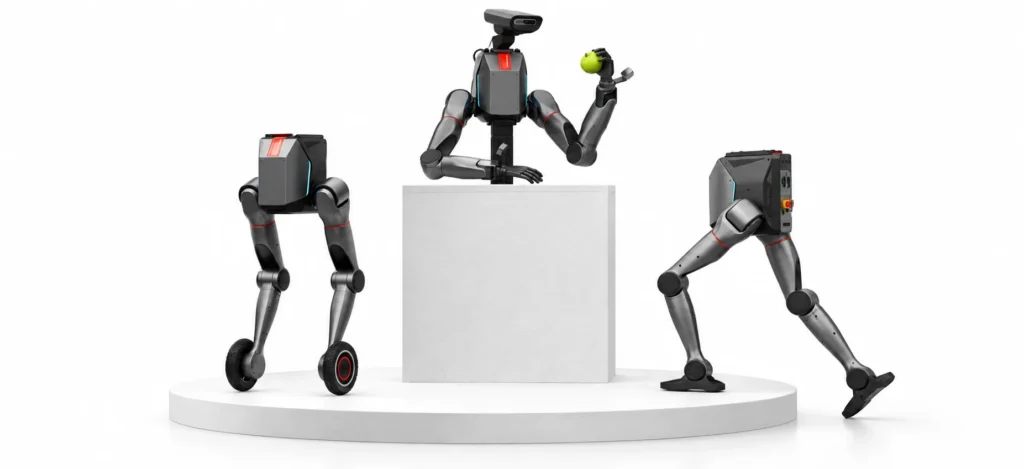
Interest in humanoid robots for universities, technology centres and laboratories is growing fast, both for research and for teaching. But not every robot is suitable for research. One designed for exhibitions can be spectacular and still not let your team touch anything that really matters.
If you are bringing a humanoid into your research group or your training programme, these are the questions worth asking before you choose.
1. Is it an open platform or a closed demo?
This is the key difference. A research platform has to let your team programme, simulate, connect and create on real hardware, not just replay predefined movements.
- Programme: develop your own lines of work on a real humanoid platform, with an open SDK.
- Simulate: validate environments and applications before taking them into the real world.
- Connect: integrate peripherals and other systems within your research environment.
- Create: explore future applications, scenarios and integrations.
2. Which languages and environments does it support?
Always ask about the development tools. A platform that supports languages and environments widely used in robotics, such as Python, C++ and ROS 2, makes your researchers’ and students’ work reusable and keeps it from depending on a closed tool.
3. A full humanoid or a modular system?
It depends on your line of work. At Axon we recommend two platforms for education and research:
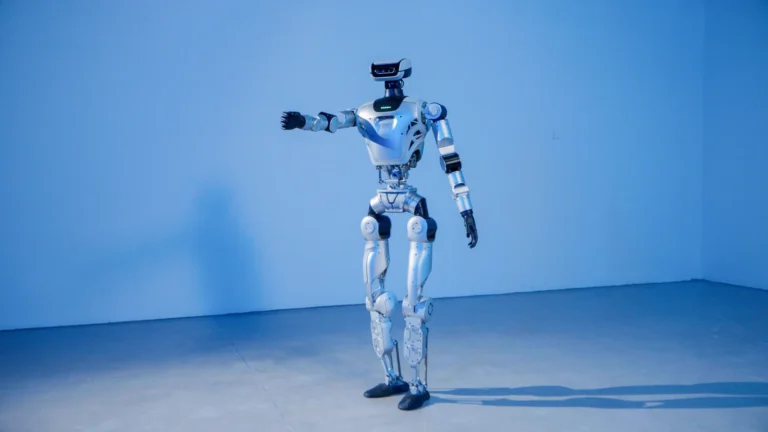
- Axon One, the benchmark bipedal humanoid. Full size (1.65 m and 31 degrees of freedom), with strong vision capabilities and a high degree of articulation. Versatile for research, general use and teaching.
- Axon Pro, the modular system that transforms. A system configured to suit the mission: a wheeled base or bipedal legs and, on top, the full humanoid body or just the elements you need. It is the platform for building configurations tailored to each line of work.
If your research focuses on locomotion and whole-body control, a bipedal humanoid is the better fit. If you need to change configuration between projects, or focus on mobile manipulation, a modular system gives you more room to manoeuvre.
4. Is it also suitable for teaching?
A good research platform is also a cutting-edge tool for training students and professionals in humanoid robotics, programming and automation. Having it in the classroom means working on real hardware with what would otherwise remain in simulation.
5. Who supports you after the purchase?
This point is often overlooked, yet it makes the difference between a robot that gets used and one that ends up in a display cabinet. At Axon, support follows four steps:
- Understand the objective: we start from your line of research or your training programme.
- Select the model: we choose the platform that best fits the intended use.
- Prepare the system: we handle commissioning, so the platform is delivered ready to start work.
- Train the team: we support your team until they can use it independently.
Behind it all is Rivas Robotics, an industrial integrator with 58 years of experience, so you are never on your own when questions arise.
Humanoid robots for universities: one platform, many ways to explore
Humanoid robotics opens up very different lines of research: locomotion, manipulation, human interaction or integration with other systems. What matters is that the platform does not hold you back.
Explore our solutions for universities and research or tell us about your project and the Axon team will help you choose the right model and configuration.
Frequently asked questions
Can I programme the humanoid robot myself?
Yes. Research-oriented platforms let you programme, simulate, connect peripherals and develop your own applications, using languages and environments such as Python, C++ and ROS 2.
Which humanoid robot is best for a university?
It depends on the line of work. For locomotion and whole-body control, a bipedal humanoid such as Axon One. To change configuration between projects or focus on mobile manipulation, a modular system such as Axon Pro.
Can the same robot be used for both research and teaching?
Yes. An open platform is suitable both for research and development and for training students and professionals on real hardware.
Does it include training for the team?
Yes. We deliver the platform ready to work and support your team until they can use it independently.
Keep reading
 8 November 2026
Rent a humanoid robot for an event: how it works
A humanoid robot turns your stand or event into something people remember. We explain how rental works: what is included, for how long and where we operate.Read article → 8 November 2026