
Humanoid robots in industry: what they can do today (and what needs a feasibility study)
Humanoid robots already add real value in industry, but not in every task. We explain what is viable today, what is worth studying first and which factors decide the outcome.
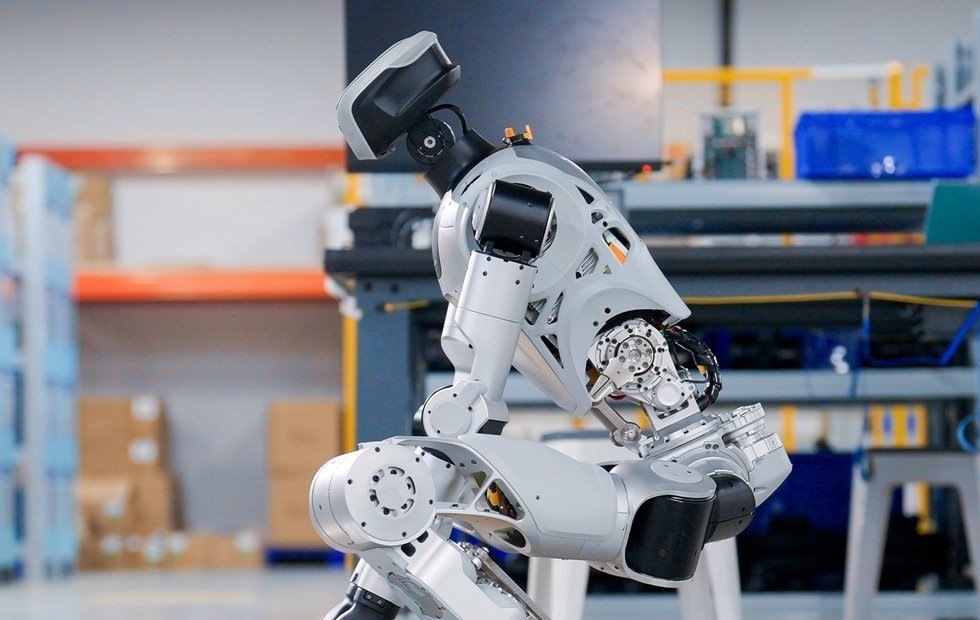
Humanoid robotics is moving fast, and every month brings another spectacular video. But if you run a plant or a warehouse, the question that matters is a different one: what can humanoid robots in industry actually do today, in my facility, with results that can be guaranteed?
At Axon we work to a clear principle: be just as transparent about what is already viable as about what still requires a technical study. It is the only way for a project to succeed and for the investment to make sense.
What humanoid robots in industry can already do today
There are well-defined functions and applications that already deliver real value in industrial and logistics environments:
- Handling and inspection in controlled environments. Clearly defined tasks, at known workstations, with stable objects and routes.
- Inspection rounds and data logging. Walking the facility, checking the condition of equipment and infrastructure, and gathering information.
- Mobile manipulation. Platforms that combine movement and arms to transfer parts between workstations within a controlled environment.
- On-site pilot tests. Validating a specific application before scaling it up, with a full-size humanoid such as Axon One.
What needs a feasibility study first
Other tasks must be analysed by a technical team before any results can be guaranteed. A humanoid robot is far more than a robot that moves: it cannot do everything, and its feasibility has to be assessed as part of the overall automation, not in isolation.
Two limits are worth being clear about from the outset:
- Reach and payload. A humanoid’s reach and the weights it can handle are limited. It does not replace heavy machinery or a dedicated high-payload industrial robot.
- Repeatability and precision. For the most demanding tasks, a humanoid still cannot match a purpose-built industrial robot.
The four factors that decide whether an application is viable
Even if the robot works perfectly, the application may not be viable within an automated process. Before proposing anything, we review these four points with you:
1. Handling speed
We check whether the robot’s pace fits your line’s cycle times. If the line demands more speed than the robot can deliver, the application will not work, however well it moves.
2. Reach and height
We measure whether it can reach the heights and distances of the workstation: shelving, tables, conveyors or containers.
3. Payload and battery life
We review the weight of what it needs to move and how many hours in a row it has to work between charges. As a guide, battery life is between 2 and 4 hours per charge, depending on the model; some models can work plugged into the mains at a fixed workstation.
4. Integration on site
We study the layout, the safety measures and how the robot coordinates with your machines, your systems and your people. Integrating a humanoid into a real automated process means reviewing many elements beyond the robot itself.
Humanoids and industrial robotics: complementary, not mutually exclusive
A common mistake is to see the humanoid as a replacement for the classic industrial robot. In practice they complement each other: the industrial robot remains unbeatable at repetitive, high-payload, high-precision tasks, while the humanoid brings flexibility to workstations designed for people.
Axon is the humanoid robotics specialism of Rivas Robotics, which has 58 years of experience in robotics and industrial automation and a presence in more than 15 countries. That experience allows us to combine both technologies in a single solution when the project calls for it.
What if the project needs more than a standard model?
When the application requires a higher payload, more height or a different base, we work to measure. With Axon Max we size the solution for the specific application: a payload of over 25 kg, heights of up to 2 m and a bipedal or AMR base, from a single unit to several for specific facilities.
How to get started
Our method has three steps: understand your need (objective, task, environment and expected outcome), validate feasibility (payload, reach, mobility, safety and integration) and propose the solution, with the model, configuration and next step tailored to your project. The proposal comes out of the study, not the other way round.
If you want to know what a humanoid robot can do in your plant today, visit our page on humanoid robots for industry and logistics or tell us about your case: the Axon team will study it with you, with no obligation.
Frequently asked questions
Can a humanoid robot replace an industrial robot?
Not for high-payload or ultra-high-precision tasks: there, a dedicated industrial robot is still the best option. The humanoid is complementary and brings flexibility to workstations designed for people.
How many hours can a humanoid robot work in a row?
As a guide, between 2 and 4 hours per charge, depending on the model. Some models can work plugged into the mains at a fixed workstation, without relying on the battery.
How do I know whether my application is viable?
Through a prior study of four factors: handling speed against cycle time, reach and height at the workstation, payload and battery life, and integration on site (layout, safety measures and coordination with other equipment).
Where do you deploy industrial humanoid robots?
In Spain and Latin America, with advice, training and support at every stage of the project.
Keep reading
 8 November 2026
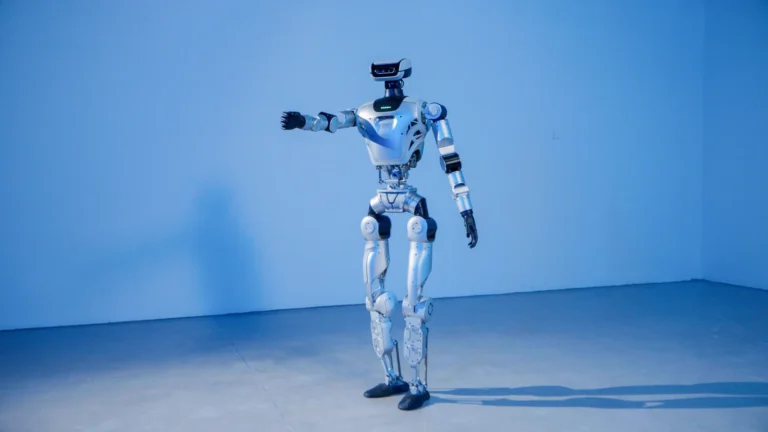
Rent a humanoid robot for an event: how it works
A humanoid robot turns your stand or event into something people remember. We explain how rental works: what is included, for how long and where we operate.Read article →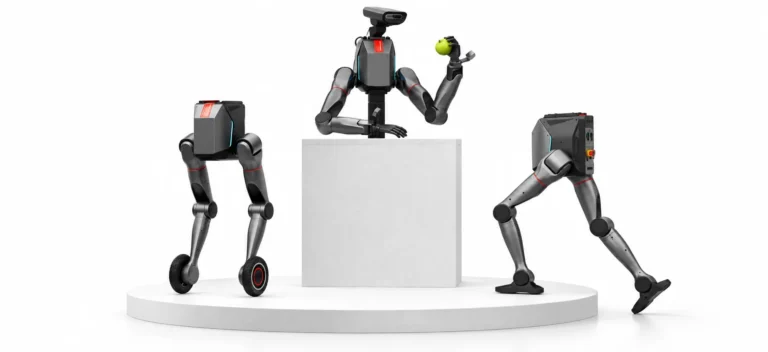 8 November 2026